01 / VILLAGE
Walk old Pāhoa
Browse the compact historic center, grab coffee or lunch, and notice the raised wooden sidewalks and false-front architecture that recall the town’s plantation-era past.
↗
Hawaiʻi Island’s youngest land—a rainforest district on Kīlauea’s East Rift Zone, where fresh lava fields, black-sand coves and the small town of Pāhoa meet the wild eastern edge of the island.
The site of Kīlauea’s devastating 2018 East Rift Zone eruption — which destroyed about 700 homes, displaced more than 2,000 people, and added 875 acres of new land to Hawaiʻi Island in three months — Puna has a distinctive culture of inexpensive, off-grid, close-to-nature Airbnbs: treehouses, yurts, open-air cabins, and tents. Stay for a month, if you like it.
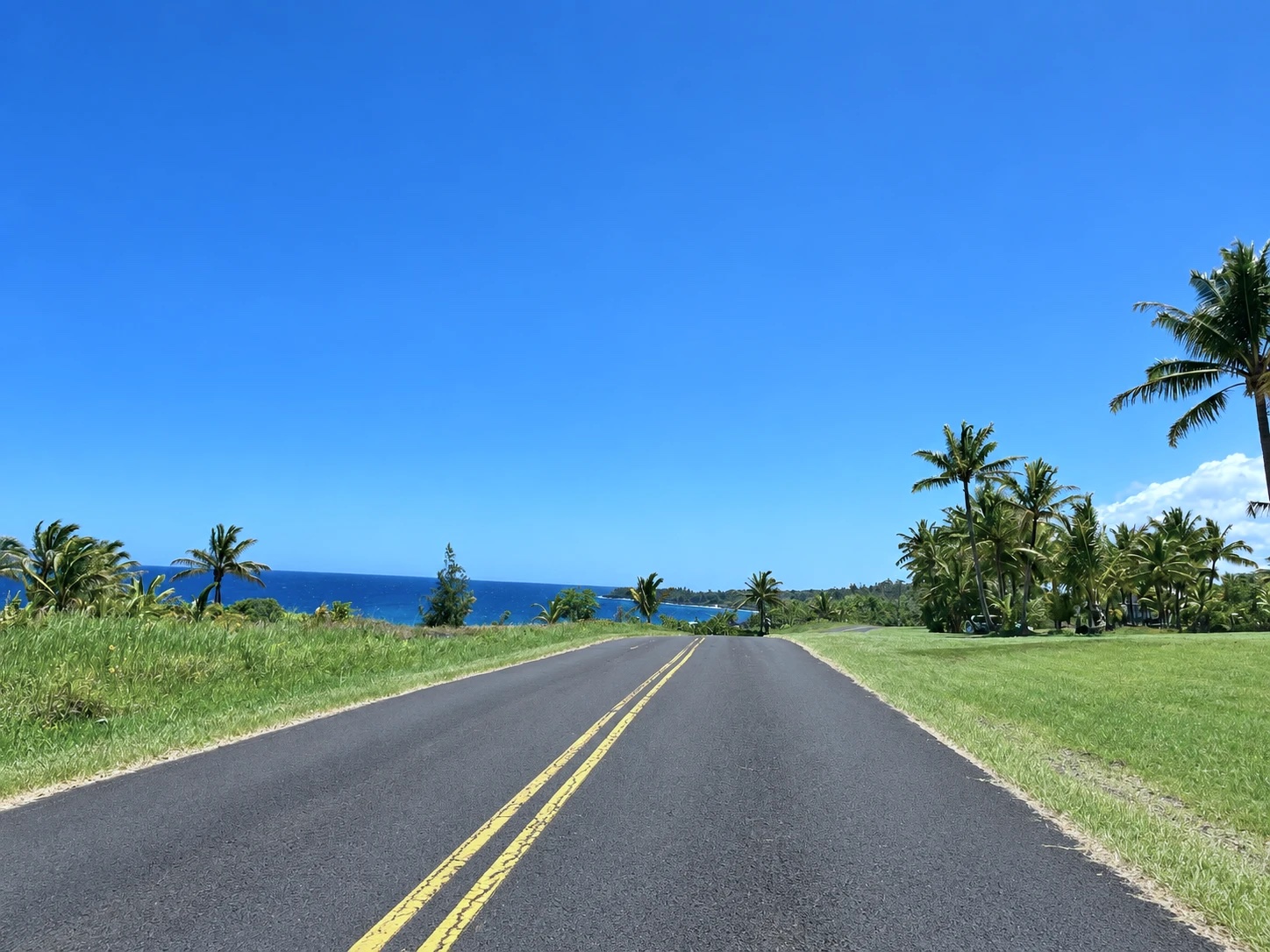
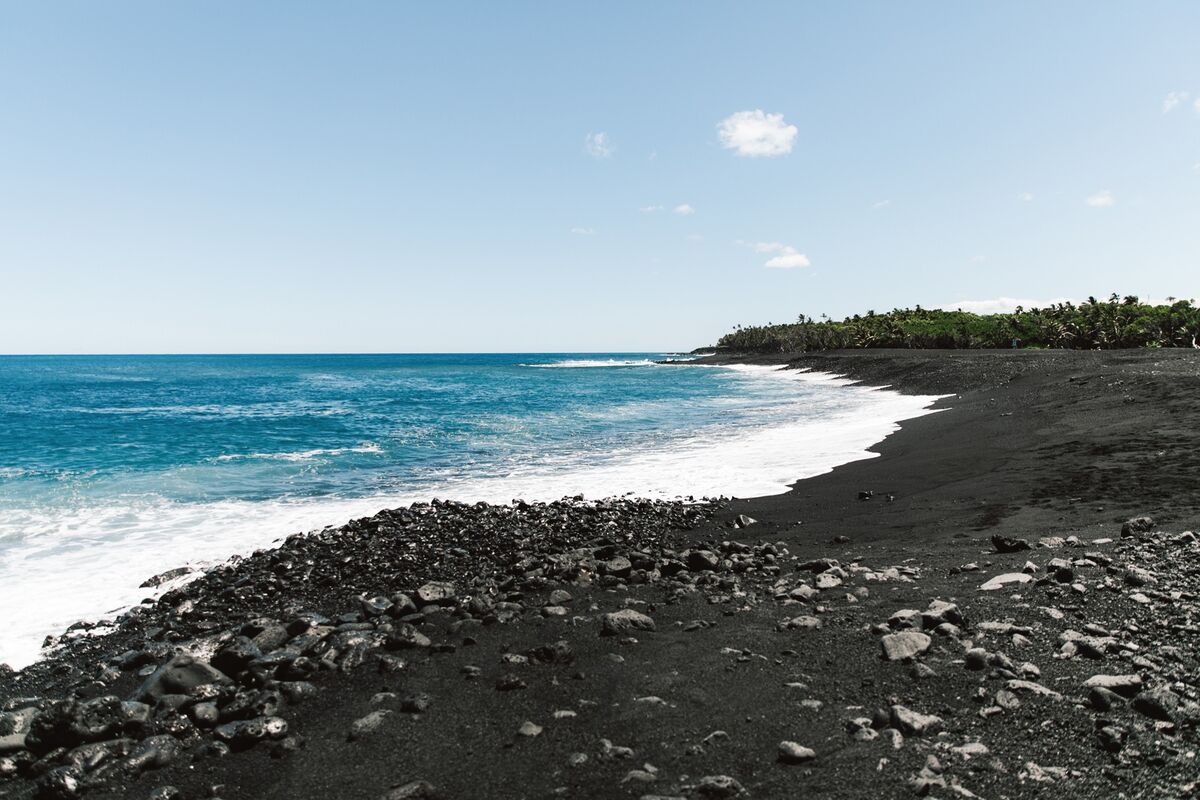
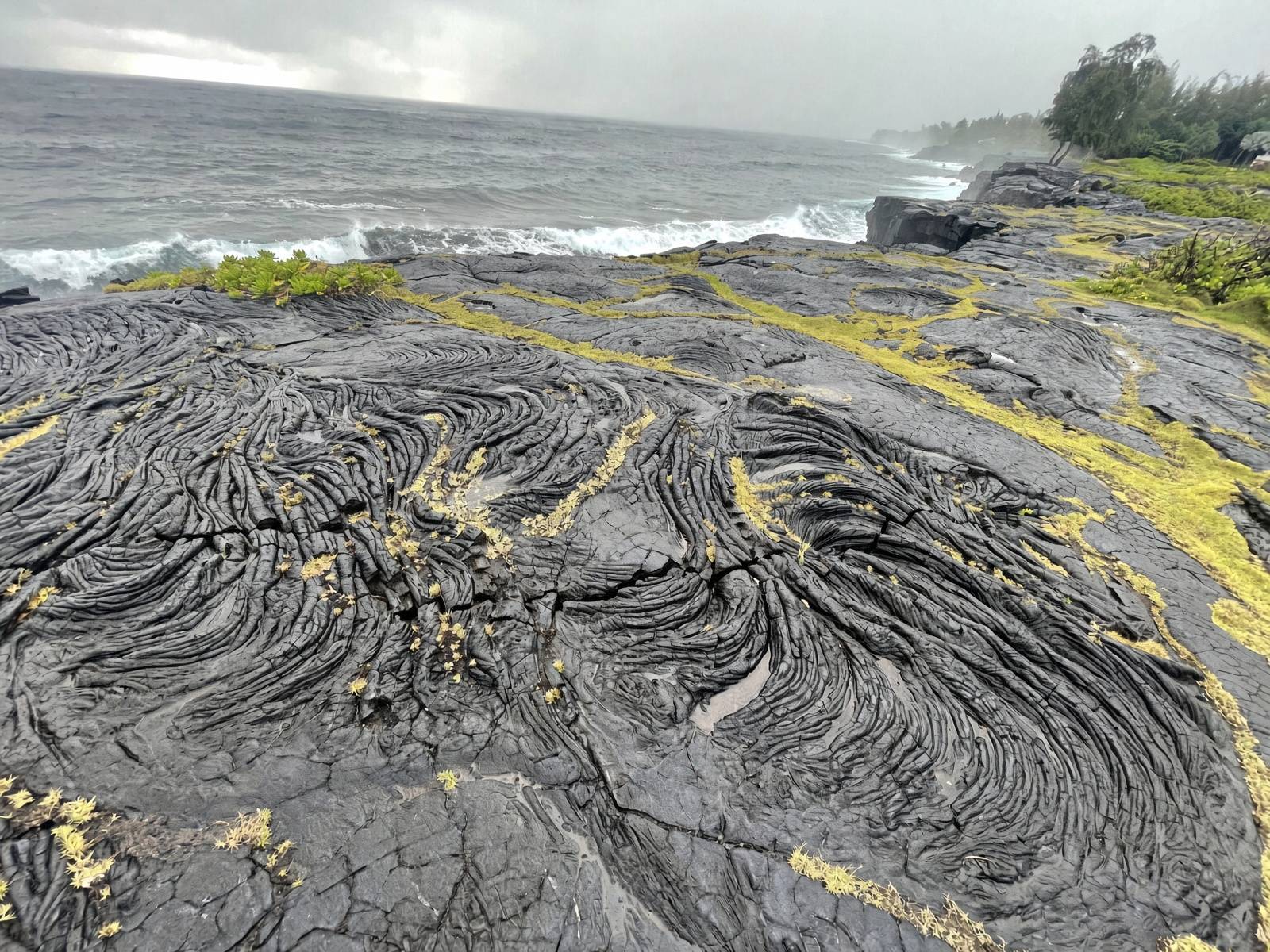
This is not a checklist destination. The pleasure is in the contrast: timber storefronts to raw lava, dense jungle to open sea, settled neighborhoods to landscapes changed within living memory.
Browse the compact historic center, grab coffee or lunch, and notice the raised wooden sidewalks and false-front architecture that recall the town’s plantation-era past.
Follow the lush coastal road through tunnels of vegetation toward Kalapana, stopping where access is legal and conditions are safe.
At the eastern end of the coastal route, recent lava gives a stark sense of the scale of Kīlauea’s 2018 lower East Rift Zone eruption.
Time a weekend visit around Makuʻu Farmers Market for fruit, prepared food and locally made goods; operating details can change, so verify before driving.
Isaac Hale Beach Park sits beside coastline transformed in 2018, where new black sand accumulated along the bay. Ocean conditions can be powerful.
On the right night, Kalapana’s community gatherings offer food, music and a side of Puna that feels completely different from the island’s resort districts.
Use Pāhoa as the starting point for a half-day or full-day loop toward the lower Puna coast. The coastal road no longer forms the through-route it once did: the 2018 eruption cut it, and the road now ends near Pohoiki.
Go slowly. The point is the transition—from inland town to thick tropical forest, ocean cliffs and then the stark open lava of the 2018 flow field.
Start with breakfast or coffee and fuel up before heading south.
See a coast repeatedly reshaped by Kīlauea and the remains of earlier lava-covered landscapes.
One of the island’s most atmospheric drives: narrow road, tropical canopy, ocean glimpses and lava-built shoreline.
The road meets the 2018 flow near a dramatically altered bay and new black-sand shoreline.
Begin in town while the village is quiet. Walk the main street before getting on the road.
Head toward the coast and spend time understanding how successive lava flows changed this end of Puna.
Drive Route 137 without rushing. Stop only at established public access points and respect residential areas.
Finish at the black-sand coast, then return toward Pāhoa before dark—or stay for a scheduled evening event in Kalapana.
Puna rewards flexible travelers. It is wet, tropical, volcanically active and less tourism-oriented than Kona or the Kohala Coast. That is exactly the appeal—but it means conditions matter.
Hilo offers more hotels and services. Pāhoa puts you closer to the lower Puna coast and works well for travelers staying in vacation rentals or small inns.
East Hawaiʻi is lush because it rains. A compact rain shell, shoes that tolerate wet pavement and a dry bag for electronics are useful.
Read the fine print, not the reviews. Shared amenities? Solar that’s only enough to charge a phone? Forget A/C — you don’t need it, and most people who live here can’t afford it. Cheap rentals are cheap for a reason.
The Puna coast is rocky and exposed, with strong surf and currents, and it isn’t safe for ocean swimming, even at the beaches. The one place to get in the water is the warm ponds at Pohoiki (Isaac Hale Beach Park), for a soak when the surf is calm. The water isn’t treated, so stay out if you have a cut.
A 4-star rating can get a host kicked off the platform. If the stay matched the listing and photos, that’s a 5-star review—even when a few things went wrong. Put the details in the comments.
Fuel, food and shopping are concentrated around Pāhoa. If you are heading deep into lower Puna, carry water and avoid assuming every stop will be open.

Looking for more Puna listings? Try Hipcamp. Focused on camping/glamping, it is a better fit for Puna’s off-grid properties.
https://www.hipcamp.com/i/big-islandaReferral link
Enter “Pahoa” in the search to find low-cost rentals in Puna, or on any of the Hawaiian Islands. Not so much camping, but off-grid cabins, yurts, vans, and treehouses.
Most Puna rentals aren’t connected to the power grid or to county water. Electricity comes from solar panels and a battery bank, and water comes from rain collected off the roof. Power can run low at night or after a few cloudy days, and when it does the water pump stops too. Here’s how these systems work, what to ask your host before you book, and how to plan your power use and meals.
Solar panels only make power while the sun is up. Whatever the house doesn’t use during the day is stored in a battery, and that battery is all you have from sunset until the next morning.
Most of Puna has no county water lines. Homes collect rain from the roof into a storage tank, and an electric pump pushes it through the pipes, so when the power goes out, so does the water.
Turn off lights and fans when you leave a room, and don’t leave lights on overnight. Charge phones, laptops and power banks during the day, not at night.
Laundry, the blender, tea kettles (if allowed) and anything else power-hungry are best between about 10 AM and 3 PM on a sunny day, when the panels produce the most.
The fridge runs all night, so if the battery dies, it stops. Keep the door shut, shop for a few days at a time and keep a cooler on hand. A closed fridge keeps food safe for about 4 hours without power, and a full freezer about 48 (USDA).
Some hosts keep a gas or propane generator for long cloudy stretches. Ask how and when to use it before you need it. Never run one indoors, in a carport or near windows, because the exhaust contains carbon monoxide. Keep it off during quiet hours.
Anything that makes heat draws a lot of power: hair dryers, curling and flat irons, space heaters, electric kettles and toasters. Many off-grid rentals don’t allow them at all, and cooking is usually on propane. Check the listing or ask your host.
Off-grid homes drain to a septic tank or cesspool. Only toilet paper goes in the toilet (no wipes, even “flushable” ones), and keep grease and harsh chemicals out of the drains.
Many Puna homes still use a cesspool, a pit that lets untreated wastewater soak into the porous rock. New ones have been banned since 2016, and state law requires all existing cesspools to be replaced by 2050. They don’t smell and you won’t notice one, so just treat it like a septic system.
| Solar size | Typical stay | Runs comfortably | Avoid |
|---|---|---|---|
| Under 1 kW | Tents, yurts, treehouses and camp-style cabins with a small battery | LED lights, phone and laptop charging, a fan, Wi-Fi | A refrigerator (a small 12-volt cooler at most) and anything that heats |
| 1–2 kW | Small cabins and studios | Lights, devices, fans, the water pump and a small efficient refrigerator, which may shut off overnight or after a cloudy stretch | Hair dryers, electric kettles, toasters, microwaves, space heaters, air conditioning |
| 2–5 kW | Small homes with a mid-size battery bank | A full-size fridge, a washing machine on sunny days, TV, brief microwave use at midday | Electric stove or oven, clothes dryer, air conditioning, any heating appliance at night |
| 5–10 kW+ | Whole-house systems with a large battery bank, often with a backup generator | Close to normal grid use: fridge and freezer, laundry, kitchen appliances, possibly an air conditioner | Running heavy loads all night; charging an electric car without the host’s OK |
This is a rough guide; every system is different. Battery size, measured in kilowatt-hours (kWh), decides how long the power lasts after dark and matters as much as panel size. If it isn’t in the listing, ask the host before you book how big the solar and battery are, whether there’s a generator, and how the water is filtered.
Shop for the power you have. Some foods spoil much faster than others when the fridge cuts out, and frozen food is the safest bet. Skip milk, and don’t buy more than a few days of food if your solar is intermittent. Many off-grid rentals are a long drive from both groceries and restaurants, so plan your meals ahead and expect a few challenges.
Approximate draw while running. Anything that heats uses more power than a small system can supply, even in full sun.
“Come for the lava. Stay for the feeling that the island is still being made.”
Puna · Hawaiʻi Island