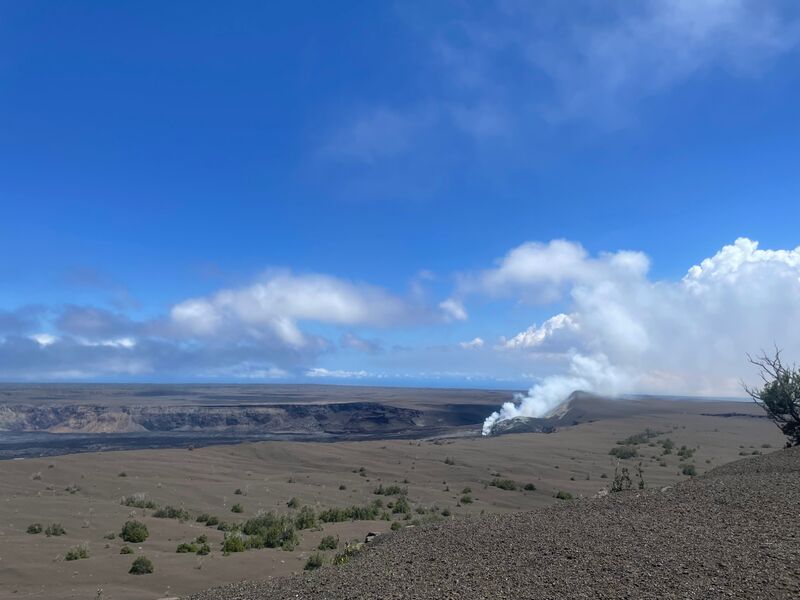
Halemaʻumaʻu
The heart of the park. When lava is active in the crater, glow after dusk is the reason overlooks fill. Check USGS / NPS before you go — viewing points shift with closures.
Volcano, Hawaiʻi
A visitor guide to Hawaiʻi Volcanoes National Park in Volcano, Hawaiʻi — home to Kīlauea and Mauna Loa, two of the world’s most active volcanoes. When an episode is underway, fountains rise from Halemaʻumaʻu and the rim glow after dark is why people stay late. It covers the eruption, the park, and how to watch it safely.
What’s happening now
Since late 2024, Kīlauea has produced a series of short, intense summit episodes inside Halemaʻumaʻu. Lava fountains can climb hundreds of feet, feed a lava lake, then pause for days or weeks. Each new episode can start with little notice — which is why the park, USGS, and alert services all matter.
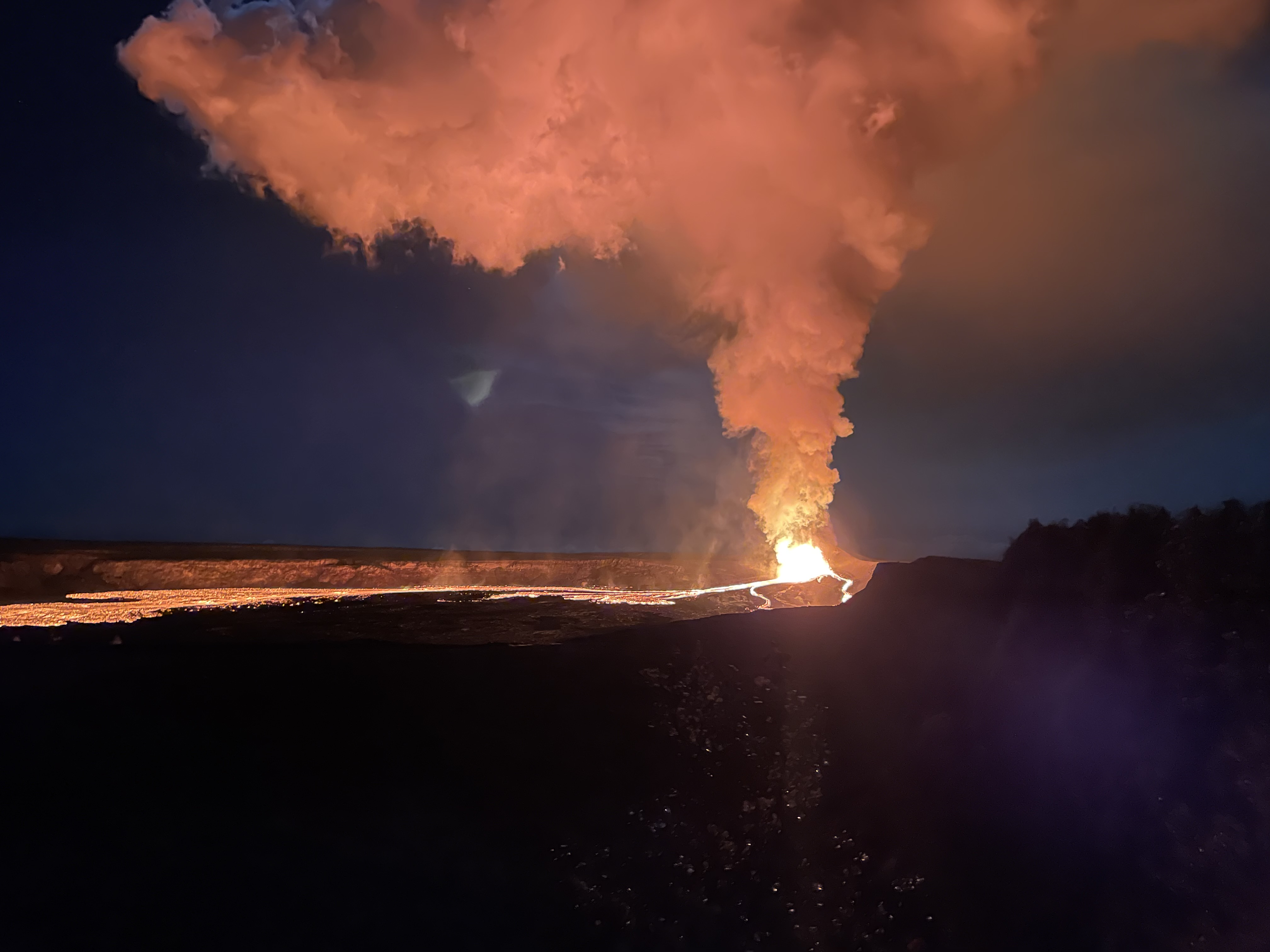
How episodes work
These are not the years-long East Rift flows many visitors remember from 1983–2018. Summit episodes are often measured in hours. The tallest fountains and the strongest glow usually come early. If you wait for a perfect photo window, the show may already be winding down.
When lava is in Halemaʻumaʻu, numbered overlooks along Crater Rim Drive West are the legal, safe viewpoints. Crater Rim Drive West and Halemaʻumaʻu are the first roundabout exit (straight) after the entrance. Conditions and open sites change with gas, collapse risk, and construction.
The showcase
The park is not a single overlook. It is a summit caldera, a rainforest lava tube, a crater you can walk across, and an 18-mile descent to where lava once met the sea.
The heart of the park. When lava is active in the crater, glow after dusk is the reason overlooks fill. Check USGS / NPS before you go — viewing points shift with closures.
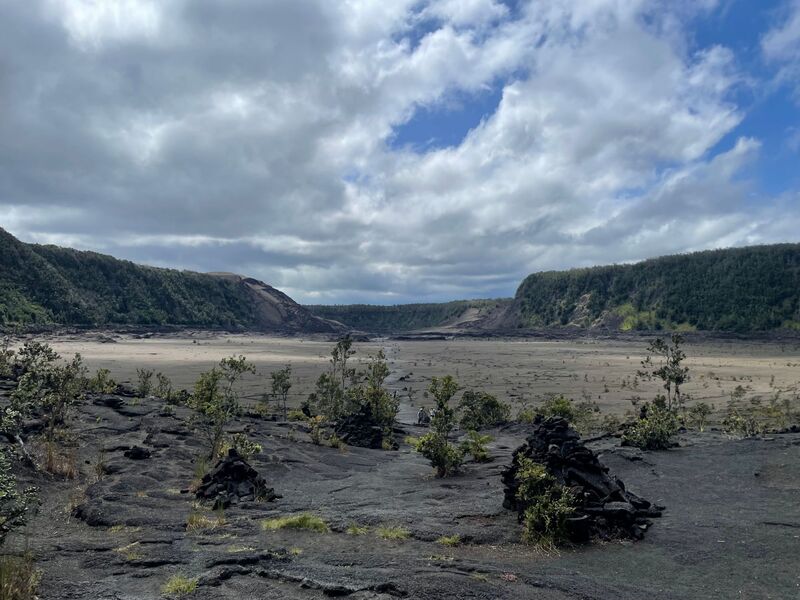
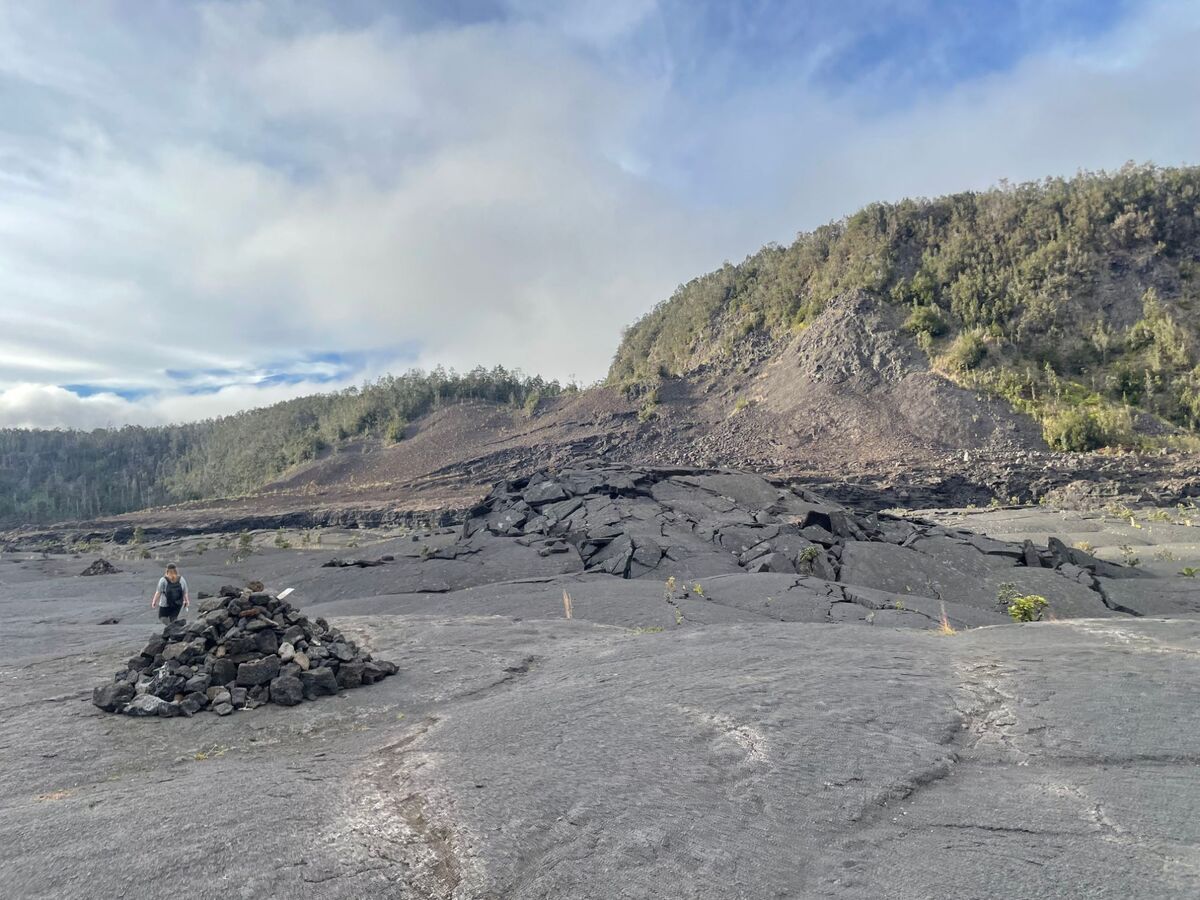
Descend through rainforest onto the frozen lake of the 1959 eruption. Steam vents, cracked pāhoehoe, and a floor that still feels newly made.
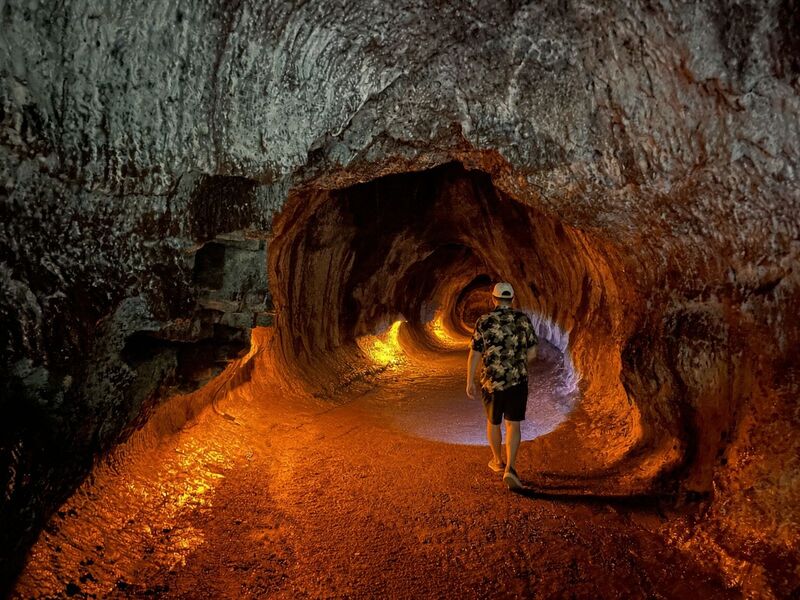
A fern-draped cave formed by a river of lava. Arrive early or late. Parking fills fast; a flashlight helps in the unlit stretch.
On foot
Kīlauea Iki is the park’s signature walk: rainforest switchbacks, then a crossing of the 1959 lava lake. Wear closed-toe shoes — a‘ā and pāhoehoe cut like glass. Bring water and a rain layer; weather flips in minutes at 4,000 feet.
Stay on marked trails. Ground cracks, unstable rims, and volcanic gas are why closed areas stay closed — even when the photo looks better from the other side of the rope.
By road
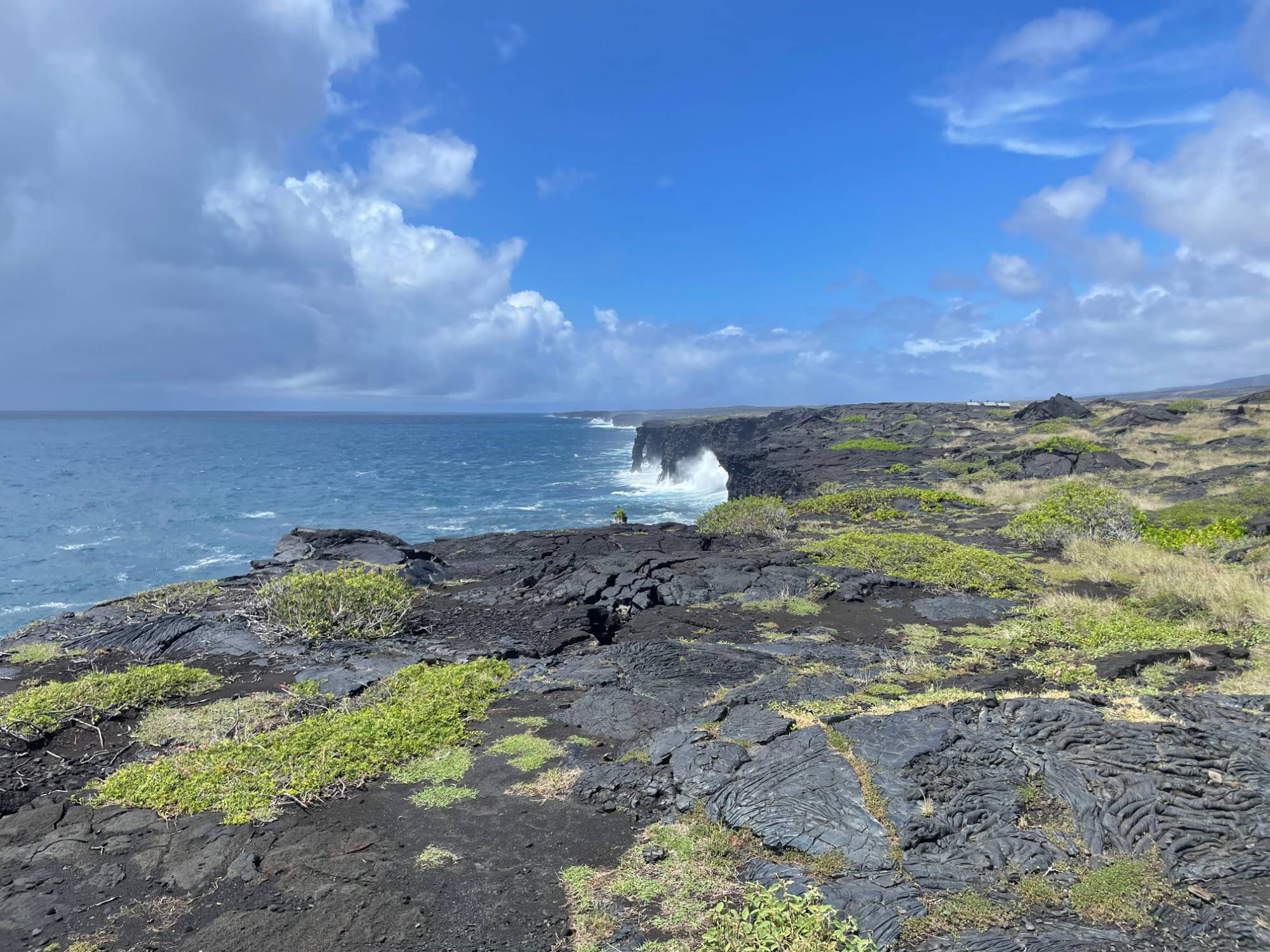
Nineteen miles from the summit rainforest down through raw lava fields to 90-foot sea cliffs. Stop at Puʻuloa petroglyphs, Hōlei Sea Arch lookout, and pullouts that show how Mauna Ulu’s flows draped the pali. The arch itself collapsed on September 26, 2026 due to erosion, after 550 years. The view of the cliffs and the surf is still there.
No services on the road. Fuel in Volcano Village or Hilo. The coast is often hotter and windier than the rim — the same day can hold two climates.
Field notes
Flexibility beats a rigid checklist. Eruptions, weather, and parking change the day. Build a Plan B — Kahuku Unit (Thu–Sun, 8–4) is quieter if the summit is jammed.
One long day can cover the rim and the coast. Two days is kinder — and the 7-day pass already paid for the second entry.
Welcome Center for current closures. Steam Vents / Wahinekapu, Kīlauea Overlook or Uēkahuna, then Kīlauea Iki if legs and weather agree. Nāhuku before the lot fills.
Drive to the coast with stops at Mauna Ulu views and Puʻuloa. Turn around with daylight. No food or fuel on the road.
Return to an open overlook only if NPS says lava is visible. Dinner in Volcano Village or at Volcano House (reserve The Rim). Watch for nēnē on the road after dusk — cars are their biggest threat.
Just outside the gate
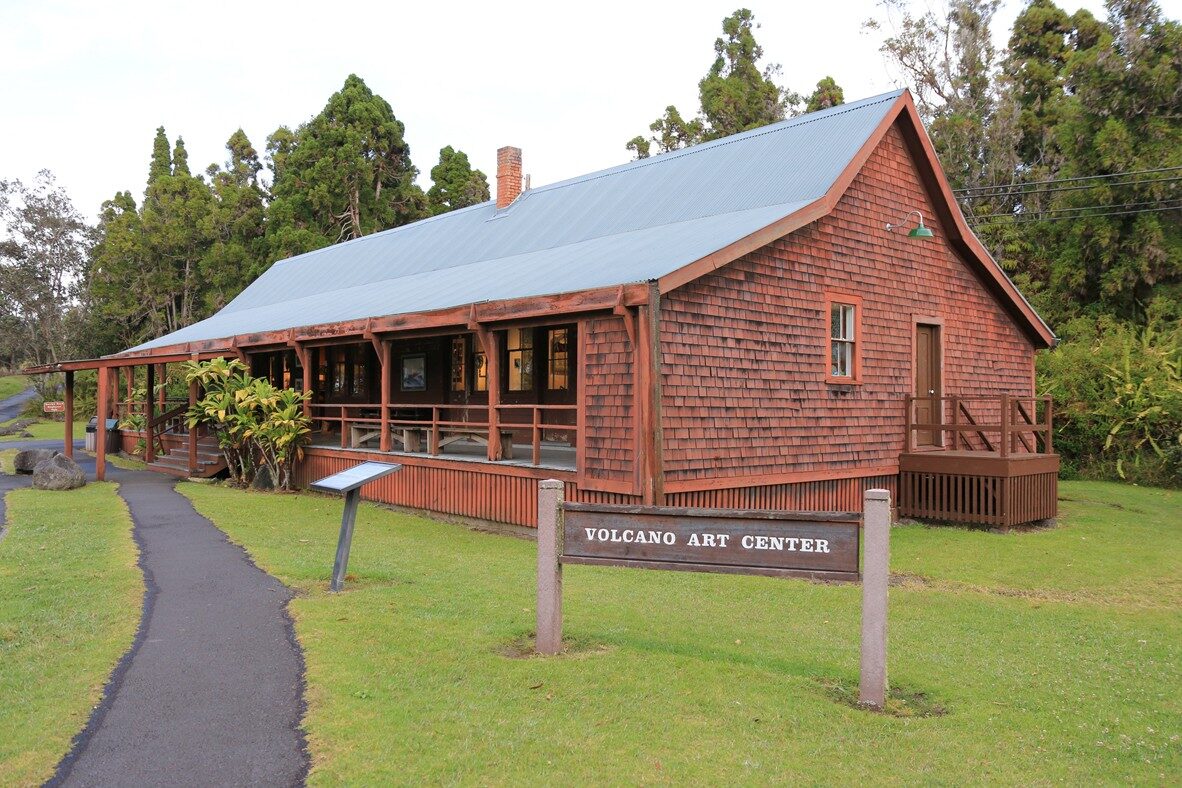
The village is a cool, misty rainforest town at the same elevation as the summit — not Waikīkī. Stay here if you want dawn and dusk without the Hilo drive.
Pono
This landscape is sacred in Native Hawaiian tradition — the home of Pelehonuamea. Enjoy it. Do not take rocks, sand, or plants. Do not cross closures for a photograph.
Always verify eruption status, road closures, and fees on the official site before you leave the house: nps.gov/havo · USGS Hawaiian Volcano Observatory updates · park phone 808-985-6011.